How AI is changing the work, the team and the talent firms seek across Hong Kong, Singapore and Asia Pacific
KEY TAKEAWAYS
- AI is taking on document heavy legal work and moving compliance from manual, retrospective monitoring to proactive and predictive risk management.
- Legal teams can absorb more work without growing headcount at the same rate, with less reliance on paralegal, junior review and external review resources.
- Compliance hiring stays strong, concentrated in advisory, financial crime, regulatory affairs and a fast emerging AI Governance specialism.
- AI is not reducing the need for legal and compliance professionals. It is changing the profile of the talent firms seek.
01 INTRODUCTION
Artificial Intelligence (AI) is transforming the way legal and compliance functions operate across financial services firms in Hong Kong, Singapore, and the broader Asia Pacific region. Banks, asset managers, private equity firms, insurers, and hedge funds are increasingly using AI to improve efficiency, navigate growing regulatory complexity, enhance risk management, and reduce operating costs.
While AI adoption remains at a relatively early stage, its impact is already being felt across both functions, influencing not only how work is performed but also how firms structure teams and recruit talent.
02LEGAL: AI in Legal Functions
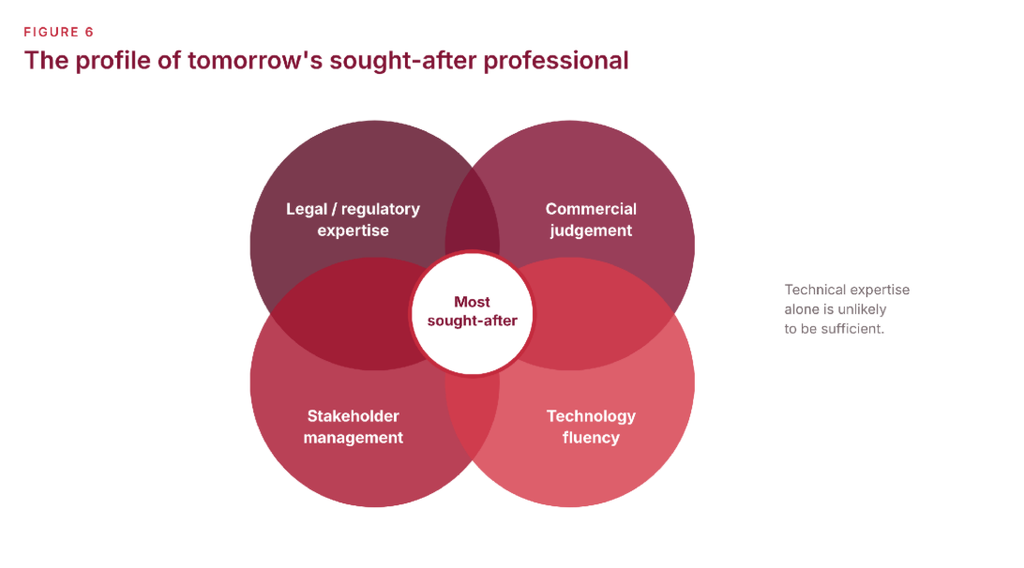
Legal teams are using AI to streamline document-intensive and high-volume activities such as contract review, contract analysis, due diligence, legal research, dispute management and document drafting. It is being increasingly used to produce first drafts of documents, allowing lawyers to focus on commercial judgement, negotiation, and risk assessment. By automating elements of document review and drafting, legal teams can redirect time towards higher value activities such as strategic advice, negotiation and stakeholder management.
Commonly adopted solutions include Harvey, Microsoft Copilot, Lexis+ AI and Thomson Reuters CoCounsel, which support legal research, contract analysis, due diligence and document drafting.
03COMPLIANCE: AI in Compliance Functions
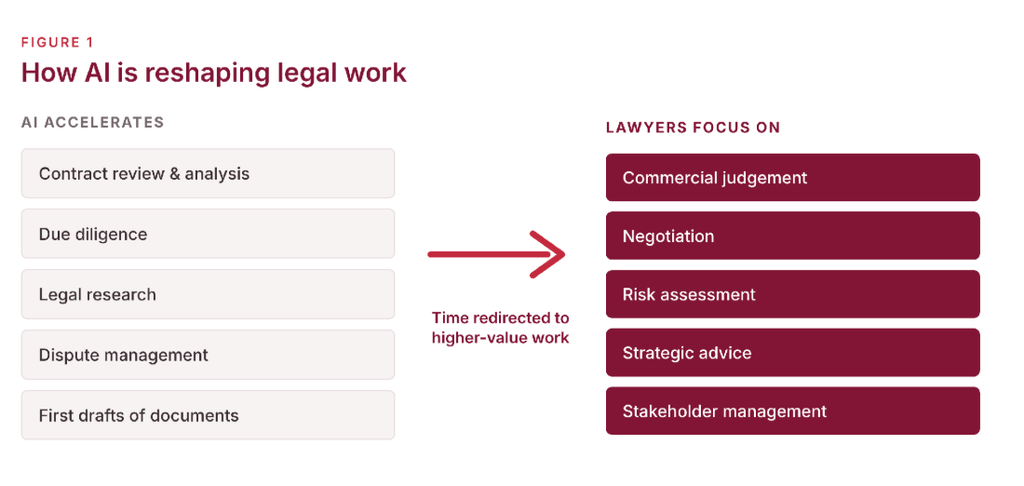
Compliance functions within financial services are among the largest beneficiaries of AI adoption due to the volume of regulatory information, transactions, customer activity and monitoring obligations they manage. AI can transition compliance teams away from predominantly manual, retrospective monitoring towards more automated, proactive and predictive risk management. Areas of compliance primarily using AI include AML / KYC / Financial Crime / Sanctions, Regulatory Monitoring, Surveillance & Market Abuse and Compliance Monitoring / Testing.
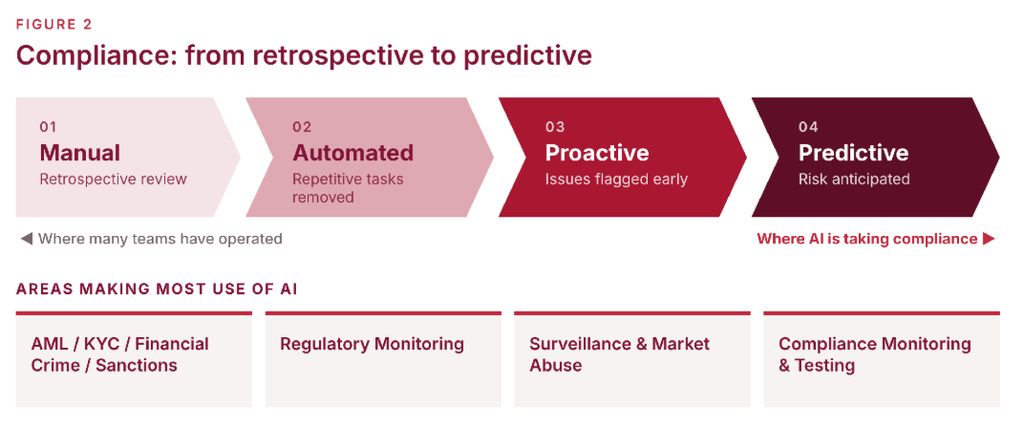
In compliance, firms are increasingly leveraging platforms such as CUBE for regulatory change management, NICE Actimize and Behavox for surveillance, and Quantexa and ComplyAdvantage for financial crime monitoring and sanctions screening.
04TALENT: Impact on Recruitment
Legal
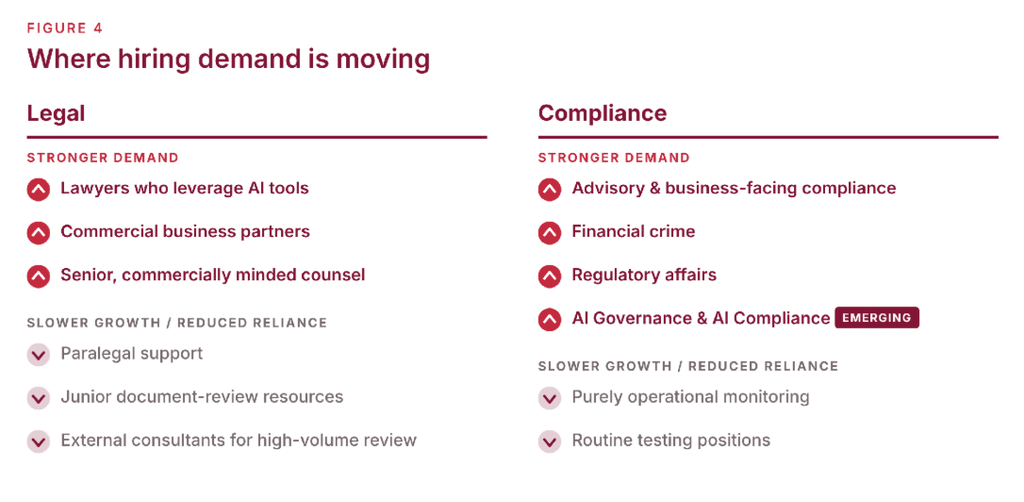
AI is allowing teams to absorb more work without increasing headcount at the same rate. As a result of this, we are beginning to see reduced reliance on paralegal support, junior document review resources and external legal consultants for high volume review exercises. While this does not necessarily result in headcount reductions, slower headcount growth relative to business growth is expected.
In the future, legal hiring decisions are likely to place greater emphasis on a candidate’s ability to leverage AI tools while acting as a commercial business partner. General Counsels and Heads of Legal may ultimately be able to support larger and more complex businesses without increasing headcount at the same rate as in the past.
Compliance
While compliance headcount continues to grow, hiring demand is increasingly concentrated in advisory, financial crime, regulatory affairs and business-facing compliance roles. Demand for purely operational monitoring and testing positions may grow more slowly as firms automate repetitive processes.
Compliance hiring will remain strong with a key focus on hiring those who can interpret regulatory developments, advise the business, provide solutions and manage regulatory relationships. We also expect growing demand for AI Governance and AI Compliance professionals as regulators place greater focus on model governance, data usage, explainability and AI-related risk management.
As routine monitoring activities become more automated, compliance professionals are increasingly expected to exercise judgement, challenge business decisions and provide commercially pragmatic regulatory advice.
05Conclusion
AI is reducing the amount of time spent on repetitive work performed by legal and compliance teams. AI tools are helping firms improve productivity, strengthen compliance frameworks, and manage risk more effectively.
Over the past decade, many firms have expanded legal and compliance functions by adding junior and mid-level resources to manage increasing workloads. AI has the potential to alter this model. Rather than simply adding headcount, firms may increasingly seek experienced professionals capable of leveraging technology to enhance productivity and oversee AI-enabled processes.
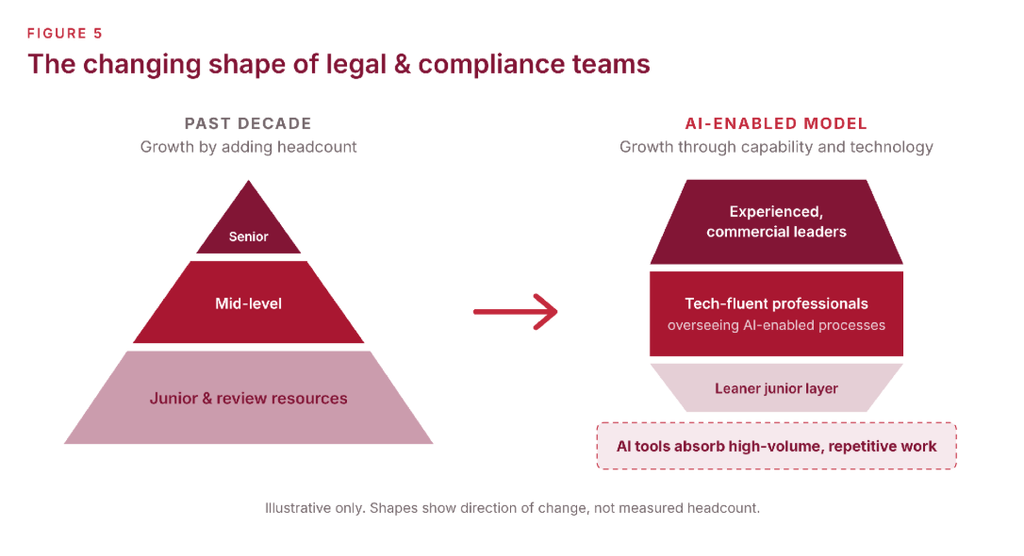
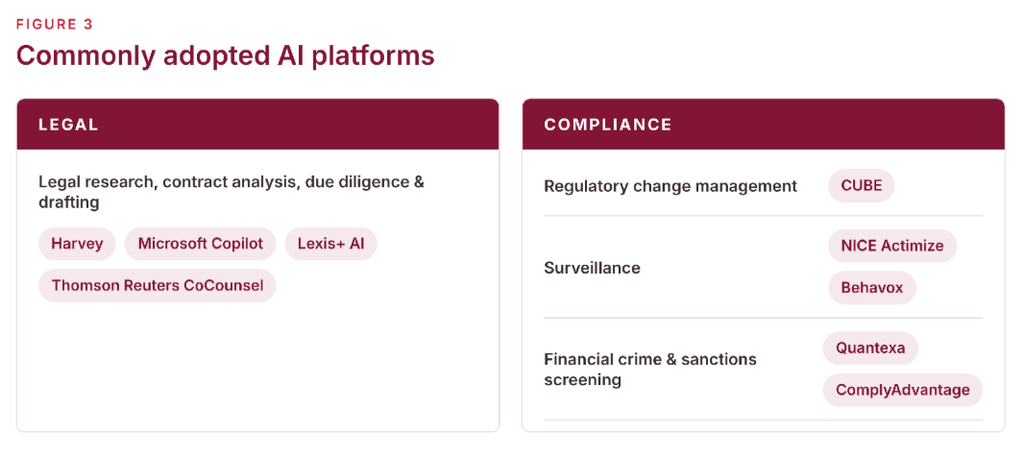
As a result, we expect hiring demand to become increasingly focused on senior, commercially minded legal and compliance professionals who combine technical expertise with technology fluency, strong stakeholder management skills and strategic judgement.
Our observation is that AI is not reducing the need for legal and compliance professionals within financial services but rather changing the profile of talent that firms seek.
As AI becomes embedded within daily workflows, technical expertise alone is unlikely to be sufficient. The most sought-after professionals will be those who combine strong legal or regulatory knowledge with commercial judgement, stakeholder management capabilities and the ability to effectively leverage technology.